
Chess Sudoku
Studio Goya LLCBoard
4.657.00 Reviews
- Version
- 1.8.1
- Installs
- 10.00K
- Age Rating
- Everyone
Screenshots
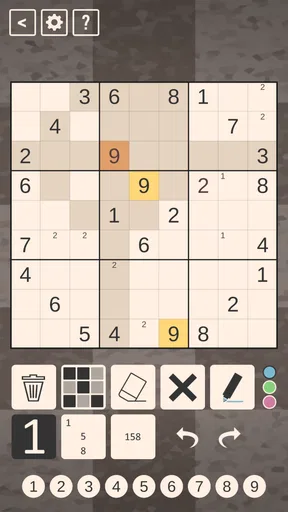
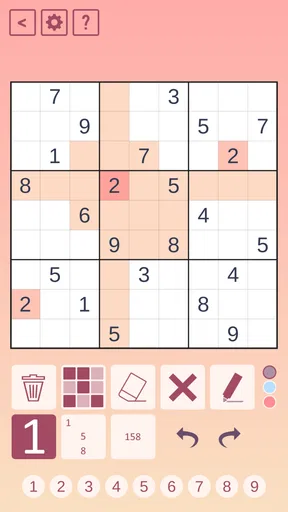
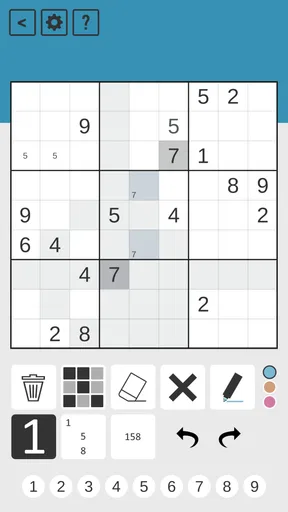
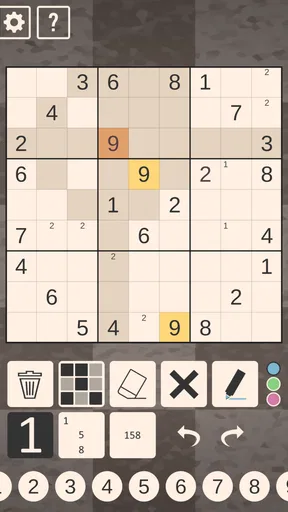
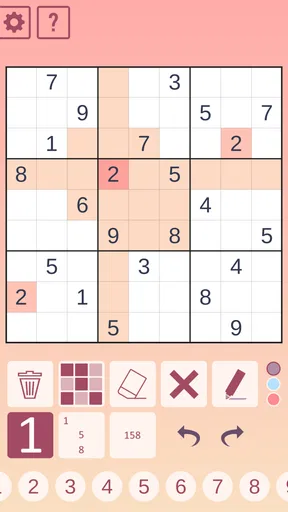
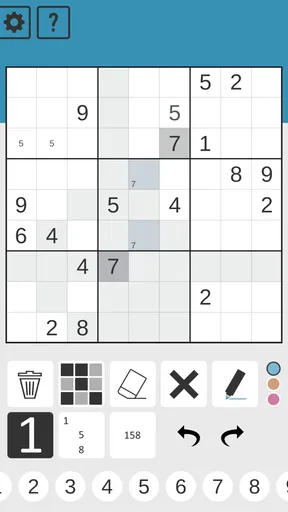
Our Review of Chess Sudoku
 Analysis by Appyee
I did not expect a Sudoku game built around chess to feel so different from the usual number-grid routine, but Chess Sudoku quickly showed me why its focused design works. It is a board game from Studio Goya LLC that turns familiar Sudoku logic into a more distinctive puzzle experience, with handcrafted challenges rather than an endless stream of interchangeable grids. I found it especially appealing when I wanted something quiet and deliberate instead of a fast game with timers, bright effects, or constant rewards.
The basic idea is easy to understand: you solve Sudoku-style puzzles while thinking through a chess-inspired layout. That combination gives each board a different character from ordinary Sudoku apps. The challenge is not simply filling spaces because a number has not appeared nearby; it encourages me to look at relationships across the board and make deductions in a more visual, positional way. The result is a game that feels familiar enough for a Sudoku player to start quickly, yet unusual enough to justify keeping it alongside a standard puzzle app.
How the current version feels to play
Version 1.8.1 is the version I would judge as the current experience. It is a compact, paid game rather than a free download built around advertisements or repeated purchase prompts. The listed price is $4.99, which makes the decision fairly simple: this is for someone who values a focused puzzle collection and would rather pay once than tolerate interruptions. I think that price makes more sense for regular puzzle players than for someone who only opens Sudoku games once every few months.
The game is suitable for Everyone, and that matches the way I experienced it. There is no need to understand chess strategy before starting. The chess connection affects how I approach the puzzles, but it does not turn the game into a lesson in openings, tactics, or competitive play. A child who already enjoys logic puzzles could understand the appeal, while an adult Sudoku fan can appreciate the extra layer without studying chess terminology first.
What stands out most is the handcrafted feel. Many mobile Sudoku games rely on automatically generated boards, which can be perfectly valid but often feel anonymous. Here, I pay more attention to the construction of each puzzle because the chess element makes the arrangement feel intentional. I am not just racing through a sequence of random grids; I am examining a designed problem and trying to understand the path the creator expects me to discover.
That distinction changes how I play. With a typical Sudoku app, I may use a familiar scanning routine and finish while half distracted. With this game, I slow down and inspect the board before committing to a move. I look for constrained areas, compare possible placements, and try to avoid guessing. The best sessions feel closer to solving a small paper puzzle than consuming another disposable mobile level.
The chess connection is useful even if you are not a chess player
I would not describe this as chess with Sudoku added to it. That would give the wrong impression. The appeal comes from seeing a known logic format through a chess-shaped lens, not from moving pieces or competing against an opponent. If you enjoy chess, you may naturally notice patterns and positional relationships more quickly, but a complete beginner can still approach the game as a number-and-logic challenge.
For me, the most interesting effect is psychological. Standard Sudoku encourages a row, column, and box mindset. Chess Sudoku makes me question whether I am relying too heavily on that routine. I become more careful about how a candidate interacts with the rest of the board, and I spend more time checking whether a move is genuinely forced. That makes even a familiar deduction feel slightly fresher.
A useful personal rule is to treat every early placement as a hypothesis that needs support. I first mark the obvious candidates, then search for a placement that is limited by the surrounding structure. Only after that do I commit. This approach is slower than tapping the first number that seems plausible, but it reduces the frustrating cycle of making a guess, discovering a contradiction much later, and having to reconstruct the puzzle.
Another practical tip is to use short sessions for difficult boards. When I stay with one puzzle for too long, I start seeing the same possibilities repeatedly and miss the simple constraint in front of me. Closing the game and returning later gives the board a clean look. That is particularly useful here because the handcrafted presentation invites careful solving rather than frantic completion.
What the game does well for everyday play
The strongest use case is a quiet break. I can imagine opening it during a commute, while waiting for an appointment, or after dinner when I want something mentally active without committing to a long game. A single puzzle gives the session a clear purpose, and the logic-based format does not require sound, social coordination, or a stable group of players.
It also works well as a screen-time substitute for people who want concentration without a competitive atmosphere. I do not need to maintain a streak, beat another player, or react to a countdown. That makes the game a good fit for someone who likes the satisfaction of finishing a problem but dislikes the pressure found in many modern mobile games.
One everyday scenario where I found the format useful was a short evening reset. Instead of opening a feed and losing track of time, I could work through a board at my own pace. The puzzle gave me something specific to focus on, and the chess-inspired structure made the activity feel more distinctive than another standard Sudoku round. It is not a replacement for every kind of relaxation, but it is a good option when I want my attention occupied in a calm way.
The game is also suitable for sharing a puzzle-solving habit with someone else, even though it is not a multiplayer title. Two people can look at the same board and explain why a placement is forced, which makes it a pleasant conversation piece for Sudoku fans. I would not buy it expecting a party game, but I can see it working as a quiet collaborative challenge between family members or friends.
Where it differs from ordinary Sudoku apps
The usual alternative is a broad Sudoku app with many difficulty levels, automatic hints, daily challenges, statistics, and perhaps several puzzle variants. Those apps are often better if I want a large toolset or a continuous supply of new activities. They can also be more welcoming when I am still learning, because their teaching features and adjustable assistance are usually central to the experience.
Chess Sudoku takes a narrower path. Its appeal is the identity of the puzzle design, not the size of a feature checklist. I prefer it when I want a curated-feeling board game that asks me to think carefully. I would choose a more conventional Sudoku app if I wanted to track improvement, compare completion times, switch between many formats, or rely heavily on guided hints.
The paid model is another meaningful difference. Paying $4.99 removes the need to judge the game by how aggressively it tries to keep me engaged. I can focus on the board instead of wondering when an advert will appear or whether a useful tool is hidden behind another purchase. On the other hand, a free Sudoku app may be the better choice for a casual player who wants to sample the genre before spending anything.
Its audience is therefore quite specific. I recommend it to people who already enjoy Sudoku, appreciate unusual board-game ideas, and are comfortable learning through experimentation. I would skip it if I wanted chess instruction, online competition, a story campaign, or a large collection of unrelated mini-games. The title promises a particular puzzle concept, and it is best evaluated on how well that concept suits your habits.
How the product has evolved and what that means now
The game was released on February 29, 2020, and the current version is 1.8.1. I see that version history as a sign that the project has continued beyond its initial launch, but I would not treat the version number alone as proof of a dramatic redesign. The important current evidence is that the game remains available as a focused Chess Sudoku experience from Studio Goya LLC, with its original concept still at the center.
For an existing user, that continuity is reassuring. Someone who bought the game for its chess-and-Sudoku blend is not being asked to learn an entirely different product. The core reason to return remains the same: solve distinctive logic boards in a calm, self-directed way. If you enjoyed the earlier experience, the current version should still feel recognizable rather than like a separate game wearing the same name.
At the same time, I would keep expectations realistic. A later version does not automatically mean that every modern convenience has been added. I would not choose this title on the assumption that it now matches the broadest Sudoku platforms in customization, social play, or progress tracking. Its evolution appears most meaningful as maintenance and refinement of a specialized puzzle game, not as a promise to become an all-purpose puzzle hub.
The game has attracted a 4.6 average from around 559 ratings, and it has more than 10K installs. Those figures suggest a small but clearly interested audience rather than a mass-market hit. I find that useful context: the game seems to appeal strongly to its intended niche, but it does not have the enormous user base that can guarantee every device, preference, or play style has been thoroughly represented.
That smaller audience can be a positive. A specialized game does not need to chase every trend, and the focused design is part of its charm. It can also mean that a prospective buyer should be more selective. If the chess variation does not appeal to you, the modest scale of the product gives you fewer reasons to choose it over a mature general Sudoku app.
Small frictions that affect the decision
The first limitation is variety of purpose. Even if the puzzles themselves provide meaningful variation, the overall activity remains centered on solving Chess Sudoku boards. I cannot switch to a word puzzle, a conventional chess match, or a competitive mode when my mood changes. That focus is a strength during a logic-puzzle session, but it can feel restrictive if I expect one app to provide several kinds of entertainment.
The second limitation is the learning curve created by unfamiliarity. A standard Sudoku player may understand the rules quickly but still need time to develop a reliable solving rhythm for this format. That is not a flaw in the concept, yet it means the first session may feel less immediately comfortable than opening a conventional Sudoku app. I recommend giving the game several puzzles before deciding whether the unusual structure works for you.
The third trade-off concerns assistance. I prefer solving without excessive help, but players who depend on step-by-step explanations may find a specialized design less approachable than an educational Sudoku product. If your main goal is to learn formal solving techniques, choose an app built around tutorials and progressive instruction. Choose this one when discovery and independent deduction are part of the enjoyment.
The price also deserves an honest look. At $4.99, it is not an impulse-free option for everyone, especially when mobile stores offer many Sudoku games at no upfront cost. I think the purchase is easier to justify for someone who dislikes ads and expects to return regularly. If you are uncertain about the concept, watching a demonstration or trying a free traditional Sudoku first may be the more sensible route.
Device compatibility is reasonably broad because the game supports Android 6.0 and later. That makes it accessible to people using older Android hardware, although compatibility does not guarantee that every screen size will feel equally comfortable. On a small display, careful candidate checking can be more tiring, so I would pay attention to readability during the first session rather than assuming the experience will feel identical on every phone.
Who should play it and who should look elsewhere
I would recommend this game to a Sudoku regular looking for a more distinctive board layout, a chess enthusiast who enjoys logic but does not need a competitive chess app, and anyone who prefers a paid, interruption-free puzzle experience. It is also a good fit for patient players who enjoy returning to a difficult board after a break instead of chasing rapid scores.
I would point a beginner toward a more instructional Sudoku app if they want explanations for every technique. I would also suggest a conventional free alternative to anyone whose priority is maximum volume, daily content, detailed statistics, or a wide selection of variants. The same advice applies to players who want multiplayer interaction: this is a solitary puzzle game, not a social chess platform.
For parents, the Everyone rating makes the age suitability straightforward, but I would still choose it based on the child’s interest in logic puzzles rather than the rating alone. A child who enjoys spotting patterns may find the chess theme motivating. A child looking for action, characters, or immediate rewards will probably lose interest quickly.
What I would watch before recommending it long term
My main question for the future is whether the game can preserve its handcrafted identity while continuing to give returning players enough reason to come back. The best path would be thoughtful puzzle design that respects the existing concept rather than adding unrelated systems. I would value improvements that make solving clearer and more comfortable without turning the game into a noisy collection of rewards.
I would also watch how well the experience serves two different audiences: experienced Sudoku players who want depth and newcomers who need a gentle entry point. Those goals can conflict. Too much guidance may reduce the satisfaction of discovery, while too little explanation can make the chess connection feel opaque. The ideal evolution would help players understand the format without solving the interesting parts for them.
For current owners, the practical advice is simple: return to it when you want focused reasoning, not when you want a broad mobile-game package. Use a short session to test your concentration, pause when the board starts to blur, and treat the unusual layout as the point rather than trying to force it into the mold of ordinary Sudoku. That mindset makes the game more rewarding.
My final recommendation is positive but specific: Chess Sudoku is worth the $4.99 asking price if you want a calm, specialized logic game and already like the idea of combining Sudoku thinking with a chess-inspired board. Its 4.6 average and audience of over 10K installs show that the concept has found real interest, while its focused scope explains why it will not suit everyone. I would choose it over a typical Sudoku app when I want handcrafted-feeling puzzles and a fresh mental routine; I would choose the usual alternative when I need tutorials, endless variety, social features, or detailed progress tools.
After spending time with it, I see the game as a carefully defined niche rather than a universal puzzle recommendation. That is exactly why I can recommend it honestly. It does not need to imitate every larger Sudoku app. It only needs to make its chess-inspired logic enjoyable, and for the right player, it creates a slower, more thoughtful way to spend a few minutes with a phone.
Verdict
Strengths of Chess Sudoku
- Combines chess tactics with Sudoku-style deduction for varied gameplay.
- Works well for short sessions and quick mental challenges.
- Helps improve pattern recognition and logical thinking.
- Simple rules make it approachable for puzzle fans.
- Offers a refreshing alternative to traditional Sudoku apps.
Limitations of Chess Sudoku
- May feel confusing until players understand the chess-based rules.
- Limited appeal for users who prefer classic Sudoku only.
- Some puzzles can become repetitive after extended play.
- Requires careful concentration, which may not suit casual play.
- Difficulty may feel uneven between different challenges.
Similar Picks in This Category
View All
Ludo King®
Gametion4.1

Ludo
Yarsa Games4.6

Tile Master® - Matching Game
Higgs Studio3.6

Checkers Online
CC Games4.6

Dominoes
Loop Games4.7

Chess
Chess Prince4.6
Frequently Asked Questions
What is Chess Sudoku, and how does it combine chess with Sudoku?
Chess Sudoku is a logic puzzle game that combines traditional Sudoku rules with chess-inspired challenges. You still complete a nine-by-nine grid by placing numbers without repeating them in rows, columns, or sections, but the game may introduce chess-themed presentation, pieces, missions, or additional strategic elements. It is designed for players who enjoy both number puzzles and the atmosphere of chess.
Is Chess Sudoku suitable for beginners?
Yes, Chess Sudoku can be suitable for beginners, especially if you already understand the basic rules of standard Sudoku. The early puzzles generally provide a gentle introduction to the game mechanics, while later levels require more advanced deduction and careful planning. New players should begin with the easiest difficulty, use available hints sparingly, and learn the rules before attempting the most challenging boards.
Does Chess Sudoku require an internet connection to play?
Chess Sudoku is generally intended to be playable as a casual puzzle game, and many of its core boards can usually be accessed without a constant internet connection. However, features such as advertisements, cloud synchronization, online events, leaderboards, updates, or promotional content may require connectivity. Availability can depend on the version installed and the device platform, so checking the app listing is recommended.
Are there hints, mistakes, or other assistance features in Chess Sudoku?
Chess Sudoku commonly includes helpful tools intended to make difficult puzzles more approachable, such as hints, mistake notifications, notes, undo options, or progress assistance. These features can be useful when you are learning the game or become stuck, although some may be limited by in-game resources, advertisements, or premium access. Players seeking a pure challenge can usually choose to avoid assistance.
Is Chess Sudoku free to download, and does it contain advertisements or purchases?
Chess Sudoku may be available as a free download, but the exact business model can vary between Android and iOS versions. Free editions may include advertisements, optional purchases, extra puzzle packs, hint-related items, or upgrades designed to improve the experience. Before downloading, review the store page for current pricing, in-app purchase details, age guidance, and permissions so there are no surprises.
Play our best games!


